The cruise industry, long associated with lavish indulgence, is undergoing a significant transformation. A growing awareness of environmental responsibility is driving innovation and change, leading to the rise of sustainable and eco-friendly cruises. This exploration delves into the practices, technologies, and initiatives shaping a greener future for ocean travel, examining both the industry’s efforts and the role passengers play in minimizing their environmental footprint.
From alternative fuel sources and waste management strategies to passenger-led initiatives, we’ll examine how the cruise experience is evolving to prioritize environmental protection. We will also analyze the economic implications of investing in sustainable technologies and the role of regulations in promoting responsible practices within the cruise industry. This exploration aims to provide a comprehensive overview of this evolving sector, highlighting both the challenges and the remarkable progress being made.
Defining Sustainable and Eco-Friendly Cruises
Sustainable and eco-friendly cruising represents a significant shift from traditional cruise practices, aiming to minimize the environmental impact of these large-scale maritime operations while still providing enjoyable passenger experiences. The core principles focus on reducing emissions, protecting marine ecosystems, and promoting responsible resource management throughout the cruise journey.The pursuit of sustainable cruising involves a multifaceted approach encompassing various aspects of the cruise operation.
It’s not simply about one change but a holistic strategy addressing everything from fuel efficiency to waste management. The goal is to create a more environmentally conscious industry that can coexist harmoniously with the delicate marine environments it visits.
Core Principles of Sustainable Cruising
Sustainable cruising prioritizes minimizing the environmental footprint of the vessel and its operations. This includes reducing greenhouse gas emissions through the use of cleaner fuels and energy-efficient technologies. It also involves responsible waste management, minimizing plastic use, and implementing effective wastewater treatment systems to prevent pollution of the ocean. Furthermore, sustainable practices extend to shore excursions, promoting responsible tourism and minimizing the impact on local communities and ecosystems.
Finally, the preservation of marine biodiversity through avoidance of sensitive areas and adherence to strict environmental regulations are crucial elements.
Examples of Environmentally Responsible Cruise Practices
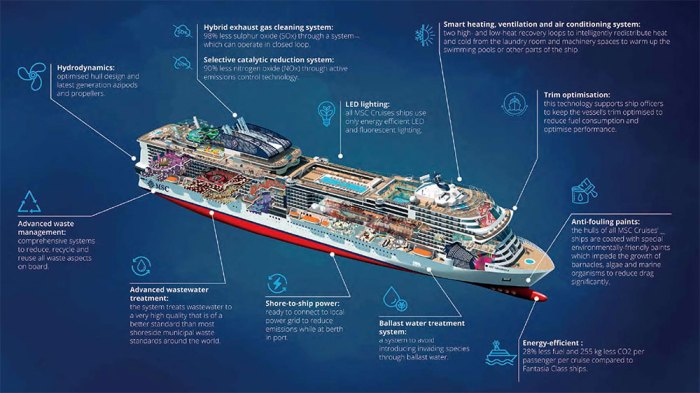
Many cruise lines are actively implementing environmentally responsible practices. Examples include the adoption of advanced wastewater treatment systems that meet or exceed international standards, significantly reducing the discharge of pollutants into the ocean. Another example is the use of shore power in ports, allowing ships to switch off their engines and reduce emissions while docked. Furthermore, several lines are investing in alternative fuels, such as liquefied natural gas (LNG), which produces fewer emissions than traditional marine fuels.
Efficient hull designs and optimized engine operation also contribute to fuel efficiency and reduced emissions. Finally, many cruise lines are actively involved in marine conservation initiatives, conducting research and supporting projects aimed at protecting ocean ecosystems.
Sustainable vs. Eco-Friendly in Cruising
While often used interchangeably, “sustainable” and “eco-friendly” have nuanced differences in the context of cruising. “Eco-friendly” generally refers to practices that directly minimize environmental harm, such as reducing waste or using recycled materials. “Sustainable,” on the other hand, encompasses a broader perspective, considering the long-term environmental, social, and economic impacts of the cruise operation. A truly sustainable cruise line not only minimizes its environmental impact but also operates responsibly within the communities it visits and contributes to the economic well-being of those communities.
Therefore, sustainability implies a more holistic and long-term approach than simply being eco-friendly.
Traditional Cruising vs. Sustainable Cruising
Traditional cruising often prioritizes maximizing passenger capacity and onboard amenities, sometimes at the expense of environmental considerations. This can result in higher emissions, increased waste generation, and potentially negative impacts on visited destinations. In contrast, sustainable cruising prioritizes minimizing environmental impact while still offering a high-quality passenger experience. This involves trade-offs, such as potentially smaller passenger capacities or adjustments to onboard amenities to reduce energy consumption and waste.
The fundamental difference lies in the prioritization: traditional cruising prioritizes profit maximization, while sustainable cruising aims to balance profit with environmental responsibility and social equity.
Environmental Impact of Cruise Ships
The cruise industry, while offering leisure and tourism opportunities, presents significant environmental challenges. The sheer scale of operations, coupled with the reliance on fossil fuels and the generation of substantial waste, contributes to a considerable ecological footprint. Understanding these impacts is crucial for developing sustainable practices within the sector.
Fuel Consumption and Emissions
Cruise ships are notorious for their high fuel consumption. Large vessels, particularly those powered by traditional heavy fuel oil (HFO), release substantial quantities of greenhouse gases (GHGs), including carbon dioxide (CO2), methane (CH4), and nitrous oxide (N2O), into the atmosphere. These emissions contribute to climate change and exacerbate global warming. Furthermore, the combustion of HFO produces air pollutants such as sulfur oxides (SOx) and nitrogen oxides (NOx), which can lead to acid rain and respiratory problems.
The discharge of these pollutants directly into the marine environment also negatively impacts marine life, damaging sensitive ecosystems like coral reefs and impacting the health of marine organisms. For instance, studies have shown a correlation between increased SOx emissions near cruise ship routes and reduced phytoplankton populations, impacting the base of the marine food web.
Waste Management and Water Pollution
Cruise ships generate massive amounts of waste, including sewage, garbage, greywater, and food waste. Effective waste management is crucial to prevent pollution of coastal waters and marine ecosystems. Improper disposal of sewage can introduce pathogens and nutrients into the water, leading to eutrophication and harmful algal blooms. Similarly, the disposal of plastic waste and other garbage can lead to entanglement and ingestion by marine animals, causing injury and death.
Greywater, which is wastewater from showers, sinks, and laundry, can also contain pollutants that can harm marine life. The sheer volume of waste generated by large cruise ships poses a significant challenge, particularly in areas with limited waste management infrastructure. For example, a large cruise ship carrying thousands of passengers can generate tons of waste per day, requiring sophisticated and efficient onboard treatment and disposal systems to minimize environmental impact.
Environmental Footprints of Different Cruise Ships
The environmental impact of cruise ships varies considerably depending on their size, technology, and operational practices. Larger ships generally have a greater environmental footprint due to their higher fuel consumption and waste generation. The type of fuel used also significantly impacts emissions. More advanced waste management technologies can mitigate the impact of waste disposal. The following table provides a simplified comparison:
| Ship Size | Fuel Type | Waste Management Method | Emission Levels (relative) |
|---|---|---|---|
| Small (under 500 passengers) | LNG or Hybrid | Advanced wastewater treatment, waste-to-energy | Low |
| Medium (500-2000 passengers) | MGO (Marine Gas Oil) | Wastewater treatment, waste separation and recycling | Medium |
| Large (over 2000 passengers) | HFO (Heavy Fuel Oil) | Basic wastewater treatment, landfill disposal | High |
Note: Emission levels are relative and depend on various factors, including engine efficiency, operational practices, and the specific technologies used. This table represents a generalized comparison and may not reflect the exact environmental performance of individual ships.
Sustainable Cruise Technologies and Innovations
The cruise industry is actively pursuing innovative technologies and strategies to minimize its environmental footprint. This involves a multifaceted approach encompassing alternative fuel sources, waste management improvements, and the implementation of energy-efficient systems. Significant progress is being made, although challenges remain in scaling up these solutions across the entire fleet.The development and adoption of sustainable technologies are crucial for the long-term viability of the cruise industry, ensuring both environmental responsibility and economic sustainability.
This section will explore some of the key advancements in this field.
Alternative Fuel Sources for Cruise Ships
Several alternative fuel sources are being explored to reduce greenhouse gas emissions from cruise ships. Liquified natural gas (LNG) is currently the most widely adopted alternative, offering a significant reduction in emissions compared to traditional marine fuels. However, LNG is still a fossil fuel, and research is ongoing into truly sustainable options. Biofuels, derived from renewable sources like algae or used cooking oil, are showing promise as a cleaner alternative.
Hydrogen fuel cells and ammonia are also being investigated as potential long-term solutions, although technological hurdles and infrastructure limitations need to be overcome. The transition to these cleaner fuels will require significant investment in infrastructure and technological development.
Waste Reduction and Recycling Programs
Sustainable cruise lines are implementing comprehensive waste management programs to minimize waste generation and maximize recycling. These programs typically include source separation of waste streams (e.g., plastics, paper, glass, food waste), advanced wastewater treatment systems, and the use of biodegradable and compostable materials. Many lines are also investing in technologies that enable the conversion of food waste into energy or fertilizer.
Furthermore, responsible sourcing of materials and a reduction in single-use plastics are integral parts of these initiatives. These measures not only minimize the environmental impact but also contribute to a more efficient and resource-conscious operation.
- Advanced Wastewater Treatment: Utilizing multi-stage filtration and purification processes to ensure treated wastewater meets stringent environmental standards before discharge.
- Food Waste Reduction and Management: Implementing strategies to minimize food waste through careful planning, portion control, and innovative food preservation techniques. Food scraps are often composted or used in biogas generation.
- Comprehensive Recycling Programs: Employing efficient sorting systems and partnering with onshore recycling facilities to process a wide range of materials, including plastics, glass, paper, and metals.
- Sustainable Sourcing: Prioritizing the use of locally sourced, sustainably produced food and other materials to reduce transportation emissions and support local economies.
Energy-Efficient Technologies
Significant advancements are being made in developing energy-efficient technologies for cruise ships. These include optimizing hull design to reduce drag, incorporating advanced propulsion systems such as Azipod units (which offer improved maneuverability and efficiency), and implementing energy-saving measures in onboard systems (e.g., LED lighting, smart grids). The use of shore power connections when docked also significantly reduces emissions.
These technologies, when implemented effectively, can lead to considerable fuel savings and emission reductions.
- Optimized Hull Design: Utilizing computational fluid dynamics (CFD) modeling to create hull shapes that minimize drag and maximize fuel efficiency.
- Azipod Propulsion Systems: Employing electric motors housed in pods beneath the hull, offering improved maneuverability and energy efficiency compared to traditional propeller systems.
- Shore Power Connections: Connecting to onshore electricity grids while in port to eliminate the need for onboard generators, significantly reducing emissions.
- Energy-Efficient Onboard Systems: Implementing energy-saving measures such as LED lighting, smart grids, and improved HVAC systems to reduce energy consumption.
Cruise Line Sustainability Initiatives
The cruise industry, long criticized for its environmental impact, is increasingly adopting sustainability initiatives. Major cruise lines are responding to growing consumer demand for eco-friendly travel and stricter regulations, implementing various strategies to minimize their footprint. The effectiveness of these initiatives varies significantly, however, depending on the scale of implementation, the technology employed, and the commitment of the company.
Several factors influence the success of these programs. These include the financial investment made by the cruise line, the willingness to adopt innovative technologies, the transparency of reporting practices, and the overall corporate culture. A crucial element is the accountability and verification of progress towards stated environmental goals. Independent audits and certifications can play a significant role in ensuring the credibility of these sustainability efforts.
Comparison of Sustainability Initiatives Across Major Cruise Lines
The following table compares the environmental policies, certifications, and goals of several prominent cruise lines. Note that the information presented reflects publicly available data and may not encompass the full range of each company’s activities. Further, the specifics of initiatives and their success can change rapidly.
| Cruise Line | Sustainability Initiatives | Certifications | Environmental Goals |
|---|---|---|---|
| Royal Caribbean International | Waste reduction programs, advanced wastewater treatment systems, shore power connectivity, fuel efficiency improvements, investment in LNG-powered ships. | Various internal sustainability reports and certifications related to specific operational aspects (details vary and are subject to change). | Reduction in carbon emissions per passenger-day, waste reduction targets, and improvements in water and air quality management. Specific numerical targets often change and are best accessed from the company’s official sustainability reports. |
| Carnival Cruise Line | Waste management programs, fuel efficiency improvements, investment in scrubber technology (controversial due to potential environmental impacts), partnering with environmental organizations. | Limited publicly available third-party certifications; relies more on internal reporting and commitments. | Focus on reducing emissions, improving waste management, and enhancing environmental stewardship. Specific quantifiable targets are often subject to change and can be found in the company’s published sustainability reports. |
| Disney Cruise Line | Emphasis on recycling and waste reduction, use of sustainable materials, energy-efficient technologies, partnerships with conservation organizations. | Information on specific certifications is less readily available compared to some competitors; focus is more on internal sustainability programs and practices. | Targets on waste reduction, responsible sourcing, and environmental conservation. Specific numerical goals are typically not made publicly available in detail, relying instead on corporate responsibility reporting. |
| MSC Cruises | Investment in LNG-powered ships, advanced wastewater treatment systems, shore power utilization, waste management programs. | Some third-party certifications related to specific environmental aspects of operations, but details are subject to change. | Significant reductions in greenhouse gas emissions, waste reduction targets, and improvements in overall environmental performance. Specific targets and progress updates are often communicated in corporate sustainability reports. |
Effectiveness of Sustainability Initiatives in Reducing Environmental Impact
Assessing the effectiveness of cruise line sustainability initiatives requires a multi-faceted approach. While many lines publicly commit to reducing their environmental footprint, the actual impact is complex to quantify and verify independently. The use of scrubbers, for example, while reducing sulfur emissions, may introduce other environmental concerns depending on the type of scrubber and waste disposal method.
Similarly, the effectiveness of waste reduction programs depends on consistent implementation, robust monitoring, and accurate reporting. Independent audits and transparent reporting are crucial for assessing the true impact of these initiatives. Further, the shift towards LNG-powered vessels represents a significant step, though the lifecycle emissions of LNG and the infrastructure required for its use must be considered.
Ultimately, a comprehensive evaluation necessitates a thorough review of each cruise line’s specific strategies, their implementation, and their verifiable results.
The Passenger’s Role in Sustainable Cruising
Sustainable cruising isn’t solely the responsibility of cruise lines; passengers play a crucial role in minimizing the environmental impact of these voyages. By making conscious choices before, during, and after their trip, travelers can contribute significantly to a more eco-friendly cruising experience. This involves understanding the environmental footprint of cruising and actively participating in responsible tourism practices.Passengers can significantly reduce their environmental footprint through simple yet impactful actions.
The cumulative effect of individual choices can lead to substantial improvements in the overall sustainability of the cruise industry. By adopting a mindful approach, travelers can enjoy their cruise while minimizing their contribution to environmental damage.
Eco-Friendly Choices Onboard
Many eco-friendly choices are available to passengers onboard a cruise ship. These options help reduce waste, conserve resources, and promote responsible consumption. For instance, opting for reusable water bottles instead of single-use plastic bottles minimizes plastic waste. Choosing to dine in the main dining room rather than ordering room service reduces energy consumption and food waste. Participating in onboard recycling programs and properly disposing of waste also contributes to a greener cruise experience.
Selecting locally sourced food options on the menu further reduces the carbon footprint associated with food transportation.
Responsible Tourism Practices
Responsible tourism is integral to sustainable cruising. This encompasses respecting local cultures and environments during shore excursions. Passengers should choose tours that prioritize sustainable practices and minimize their impact on local ecosystems. This could include avoiding activities that harm coral reefs or disturb wildlife. Supporting local businesses and communities during shore excursions also contributes to responsible tourism.
Respecting local customs and traditions, and avoiding practices that could damage or exploit local resources, are also essential aspects of responsible tourism.
Actions Passengers Can Take Before, During, and After a Cruise
Before embarking on a cruise, passengers can research the cruise line’s sustainability initiatives and choose a company committed to eco-friendly practices. They can also pack reusable items like water bottles, shopping bags, and coffee cups to reduce their reliance on single-use plastics.
- Before the Cruise: Research the cruise line’s sustainability policies, pack reusable items, and choose eco-friendly shore excursions in advance.
- During the Cruise: Minimize water and energy consumption, participate in onboard recycling programs, choose reusable items over single-use plastics, select locally sourced food options, and respect local cultures and environments during shore excursions.
- After the Cruise: Offset your carbon footprint by donating to environmental organizations, share your experiences and promote sustainable cruising practices among your friends and family, and consider supporting companies with strong environmental commitments.
The Future of Sustainable Cruising
The cruise industry stands at a crossroads. While facing increasing pressure to minimize its environmental footprint, it also possesses the potential to become a leader in sustainable tourism. The future of cruising hinges on embracing innovative technologies, enacting robust regulations, and fostering a culture of responsible travel among passengers and operators alike. This will require significant investment and collaboration across the industry and beyond.The future of sustainable cruising will be shaped by a confluence of technological advancements, policy changes, and evolving consumer preferences.
Addressing the challenges will require a multifaceted approach, incorporating both immediate solutions and long-term strategic planning.
Technological Advancements in Sustainable Cruising
Several technological innovations hold the key to significantly reducing the environmental impact of cruise ships. These advancements focus on improving fuel efficiency, reducing emissions, and developing alternative energy sources. The adoption and widespread implementation of these technologies will be crucial for the industry’s transition towards sustainability.
- Advanced Fuel Cells: Fuel cells powered by hydrogen or ammonia offer a promising pathway towards zero-emission cruising. These systems convert chemical energy directly into electricity, eliminating greenhouse gas emissions during operation. While still in the early stages of development for large-scale maritime applications, successful implementation could revolutionize the industry.
- Shore Power Connectivity: Widespread availability and utilization of shore power in ports allows ships to switch off their engines while docked, dramatically reducing air pollution in coastal areas. Increased investment in port infrastructure to support shore power is vital for its widespread adoption.
- Wastewater Treatment Technologies: Advanced wastewater treatment systems are crucial for minimizing the environmental impact of waste discharged from cruise ships. These systems can remove pollutants and contaminants, ensuring that wastewater is safe for discharge into the ocean, protecting marine ecosystems.
- Improved Hull Designs: Optimized hull designs, incorporating features like air lubrication systems and advanced propeller technologies, can significantly improve fuel efficiency, reducing fuel consumption and associated emissions.
The Role of Regulations and Policies
Stringent regulations and effective policies are essential for driving the adoption of sustainable practices within the cruise industry. International cooperation and harmonized standards are necessary to create a level playing field and prevent regulatory arbitrage. Without robust enforcement mechanisms, sustainable practices may not be widely adopted.
Economic Benefits of Sustainable Cruising Investments
Investing in sustainable cruising technologies presents significant economic opportunities. Reduced fuel consumption translates directly into cost savings for cruise lines. Furthermore, the growing demand for sustainable travel options creates a market advantage for companies demonstrating a commitment to environmental responsibility. This can attract environmentally conscious consumers willing to pay a premium for sustainable travel experiences. Investing in these technologies may also open up new markets and opportunities for related industries, stimulating economic growth in the green technology sector.
For example, companies specializing in the development and installation of shore power infrastructure or advanced wastewater treatment systems can experience significant growth. Additionally, governments may offer incentives and subsidies to encourage the adoption of sustainable technologies, further boosting economic benefits.
Cruise Vacations
Cruise vacations offer a unique and appealing travel experience, combining the convenience of all-inclusive accommodations with the opportunity to explore multiple destinations without the hassle of frequent packing and unpacking. This all-in-one approach makes cruising a popular choice for families, couples, and groups of friends seeking a relaxing and adventure-filled holiday.The allure of cruising lies in its diverse offerings catering to a wide range of preferences and budgets.
From luxurious, large-scale vessels boasting elaborate amenities to smaller, more intimate ships focusing on specific themes or destinations, there’s a cruise experience to suit nearly everyone. The all-inclusive nature, with meals, entertainment, and often shore excursions included in the price, contributes to its widespread appeal.
Types of Cruise Vacations
Cruise vacations encompass a broad spectrum of experiences, each designed to cater to specific interests and travel styles. Several popular types include:
- Luxury Cruises: These cruises offer opulent accommodations, fine dining, personalized service, and exclusive amenities. Think private butlers, gourmet restaurants, and access to exclusive shore excursions. Examples include cruises offered by Regent Seven Seas Cruises or Silversea Cruises.
- Family Cruises: Designed with children and families in mind, these cruises often feature kids’ clubs, family-friendly activities, and dedicated children’s facilities. Royal Caribbean and Disney Cruise Line are known for their family-oriented offerings.
- Adventure Cruises: These cruises often focus on exploring remote destinations, offering opportunities for kayaking, hiking, snorkeling, and other outdoor activities. Expedition cruises to Antarctica or Alaska are good examples.
- River Cruises: These cruises navigate rivers, offering a more intimate and relaxed experience with a focus on exploring the landscapes and cultures along the waterways. River cruises along the Rhine, Danube, or Mekong are popular choices.
- Themed Cruises: Catering to specific interests, these cruises might focus on music, food, or specific hobbies. Examples include cruises focused on wine tasting, blues music, or specific historical events.
Cost and Benefits of Various Cruise Itineraries
The cost of a cruise vacation can vary significantly depending on the cruise line, ship size, itinerary length, cabin type, and time of year. Generally, luxury cruises are the most expensive, while shorter itineraries and less popular travel times offer more budget-friendly options. The benefits, however, extend beyond simple cost-effectiveness. Cruises offer bundled pricing, making it easier to budget for the entire vacation.
The all-inclusive aspect often includes meals, entertainment, and some shore excursions, reducing the need for individual spending. The convenience of having accommodation, dining, and activities all in one place is also a significant benefit. Longer itineraries offer more destinations and experiences, but naturally come with a higher price tag. Shorter itineraries are ideal for those with limited time or budget.
Comparison of Cruise Vacation Options
The following table summarizes different cruise vacation options, their target audiences, and key features, along with an average cost estimate. Note that average costs are highly variable and serve only as a general guideline.
| Cruise Type | Target Audience | Key Features | Average Cost (per person) |
|---|---|---|---|
| Luxury Cruise (7-day) | High-income earners, couples seeking luxury | Opulent accommodations, fine dining, personalized service, exclusive amenities | $5,000 – $15,000+ |
| Family Cruise (7-day) | Families with children | Kids’ clubs, family-friendly activities, dedicated children’s facilities | $1,500 – $4,000 |
| Adventure Cruise (10-day) | Adventure seekers, nature enthusiasts | Remote destinations, kayaking, hiking, snorkeling, wildlife viewing | $3,000 – $8,000 |
| River Cruise (7-day) | Couples, seniors, those seeking a relaxed experience | Intimate setting, scenic river views, cultural immersion | $2,000 – $5,000 |
| Themed Cruise (5-day) | Individuals with specific interests | Focus on a specific theme (e.g., music, food, history) | $1,000 – $3,000 |
The journey towards truly sustainable cruising is ongoing, but the progress is undeniable. Through technological innovation, responsible industry practices, and conscious passenger choices, the environmental impact of cruises is steadily diminishing. The future of sustainable cruising hinges on continued collaboration between cruise lines, passengers, and regulatory bodies, ensuring that the allure of ocean travel remains compatible with the preservation of our planet’s delicate marine ecosystems.
Embarking on a sustainable cruise is not merely a choice; it’s a commitment to responsible travel and a healthier future for our oceans.
User Queries
What are the potential health risks associated with cruise ship emissions?
Exposure to cruise ship emissions, particularly particulate matter and sulfur oxides, can exacerbate respiratory illnesses and contribute to cardiovascular problems. The proximity of emissions to ports and coastal communities is a significant concern.
How can I find a truly sustainable cruise?
Look for cruise lines with transparent sustainability reports, certifications (e.g., Blue Flag), and active participation in environmental initiatives. Consider the cruise line’s fuel type, waste management practices, and commitment to reducing emissions.
Are sustainable cruises more expensive?
While some sustainable practices might slightly increase costs, many cruise lines are finding ways to integrate sustainability without significant price hikes. The cost difference is often offset by the positive environmental impact and the growing demand for eco-conscious travel.
What is the role of carbon offsetting in sustainable cruises?
Carbon offsetting programs allow cruise lines and passengers to compensate for their carbon footprint by investing in projects that reduce greenhouse gas emissions elsewhere. While a useful tool, it shouldn’t replace the need for direct emission reductions.


